
The best winter patio ideas for Las Vegas start with the sun path, not the fire pit. On the winter solstice, the midday sun sits only 30.4 degrees above the horizon — entering your patio almost horizontally from the south and west all day. An overhead patio cover does nothing for that lateral glare. The right sequence: map your sun path first using SunCalc.org, block north winds with a retractable motorized screen, install exterior solar screens on south and west exposures to filter low-angle glare, then layer in a fire pit or patio heaters, weather-resistant furniture, outdoor rugs, blankets, and string lights. Las Vegas gets roughly 8 hours of sun even in December, so this outdoor space can be genuinely usable through the colder months — with the right layout.
-
30.4 degreesWinter solstice midday sun altitude — nearly horizontal, not overhead
-
17+ feetHow far low-angle sun penetrates under a standard 8-ft covered patio
-
66%Share of January wind days coming from the north — block this side first
-
4:27 PMAverage Las Vegas December sunset — plan lighting for long winter evenings
-
95%UV rays blocked by Mermet fiberglass solar screens year-round
-
8 hoursAverage daily sunshine in Las Vegas even in December — the patio is usable
The best winter patio ideas for Las Vegas don't start with a fire pit. They start with a number: 30.4 degrees. That's how high the midday sun sits above the horizon on the winter solstice — compared to 77.2 degrees in summer. At that angle, sunlight enters your outdoor patio almost horizontally from the south and west, all day long. Your overhead patio cover, which works perfectly in July, does nothing to stop it. The cold comes from the north at 7.4–7.9 mph and strips warmth from the space before any heat source can keep up. Fix those two geometry problems first, and a Las Vegas winter patio becomes a genuinely cozy, usable outdoor space through the colder months — not a room you abandon in November and rediscover in March.
Before you start
- Know which direction your patio faces — south, west, north, or east. A free compass app on your phone gives you this in 30 seconds.
- Understand Las Vegas winter daytime highs: 57–64°F, cold enough to need wind blocking but warm enough to sit outside most afternoons with the right setup.
- Accept that your overhead patio cover does almost nothing for winter sun. The problem is lateral, not overhead — and a vertical screen is the fix.
- Have a rough measurement of your patio's depth. Most Las Vegas patios run 12–16 feet deep, and low-angle winter sun can penetrate 17 feet or more under an 8-foot cover.
- No special tools required for the planning steps. Motorized screen installation is handled by a certified dealer.
- Know that Las Vegas December sunsets fall around 4:27–4:30 PM, so usable afternoon light is shorter than it feels. Plan your lighting layer early.
Map Your Winter Sun Path Before Buying Anything
The single most important winter patio idea for Las Vegas homeowners: the December sun sits only 30.4 degrees above the horizon at midday, and it enters your patio space from a low, nearly horizontal angle from the south and west all day long. This is not a summer problem. In summer, at 77.2 degrees, the sun pours straight down and your overhead cover handles it. In winter, the sun rises in the southeast, tracks low across the southern sky, and sets in the southwest — meaning south- and west-facing patios receive direct low-angle exposure from mid-morning through late afternoon. Your overhead patio cover is solving the wrong problem.
Knowing your patio's orientation changes every decision that follows. South- and west-facing patios get the most winter sun — which is actually good for passive warmth, as long as you manage the glare. East-facing outdoor patios get hit by low-angle light early in the morning. North-facing patios are shaded and cold most of the day — they need maximum heat sources and minimum glare management. Spend 10 minutes on a clear morning with a compass app. Stand in your patio space, note where the sun enters, and watch where the shadow line falls at different hours.
At a 30-degree sun angle, direct light can penetrate 17 feet or more under a standard 8-foot-high covered patio — further than most Las Vegas patios are deep. If you're squinting from 10 AM onward in your outdoor space, that geometry is telling you exactly where your vertical screen or wind block needs to go. Map this before you shop for anything else.
Quick Check
Pull up SunCalc.org, enter your Las Vegas address, and set the date to December 21. You'll see exactly where the sun rises, where it tracks at noon, and where it sets — all in about two minutes. Screenshot it before you buy a single piece of furniture or a fire pit.
Block the North Wind First — It Strips Your Warmth
North winds dominate Las Vegas winters, accounting for roughly 66% of wind direction in January and averaging 7.4–7.9 mph hourly. That steady cold air from the north is what makes a 58°F afternoon feel genuinely chilly instead of comfortable. Before you add a fire pit, patio heaters, or a heat lamp, address the wind. A heat source fighting an open north wind is an expensive losing battle — the cold air strips warmth from the patio space faster than most heaters can replace it.
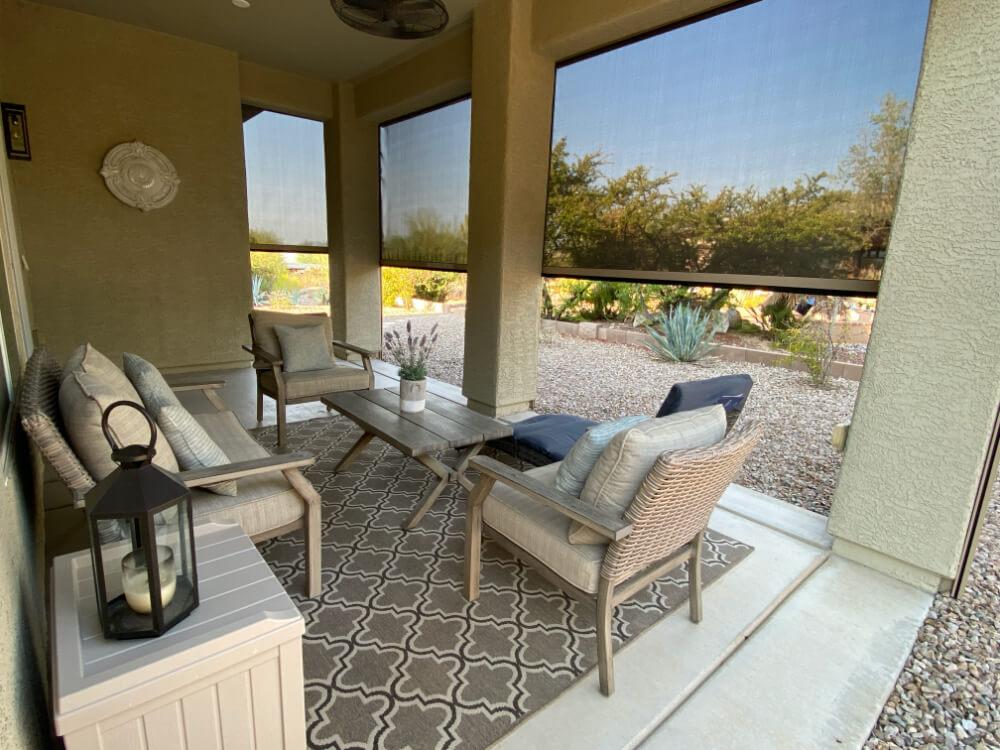
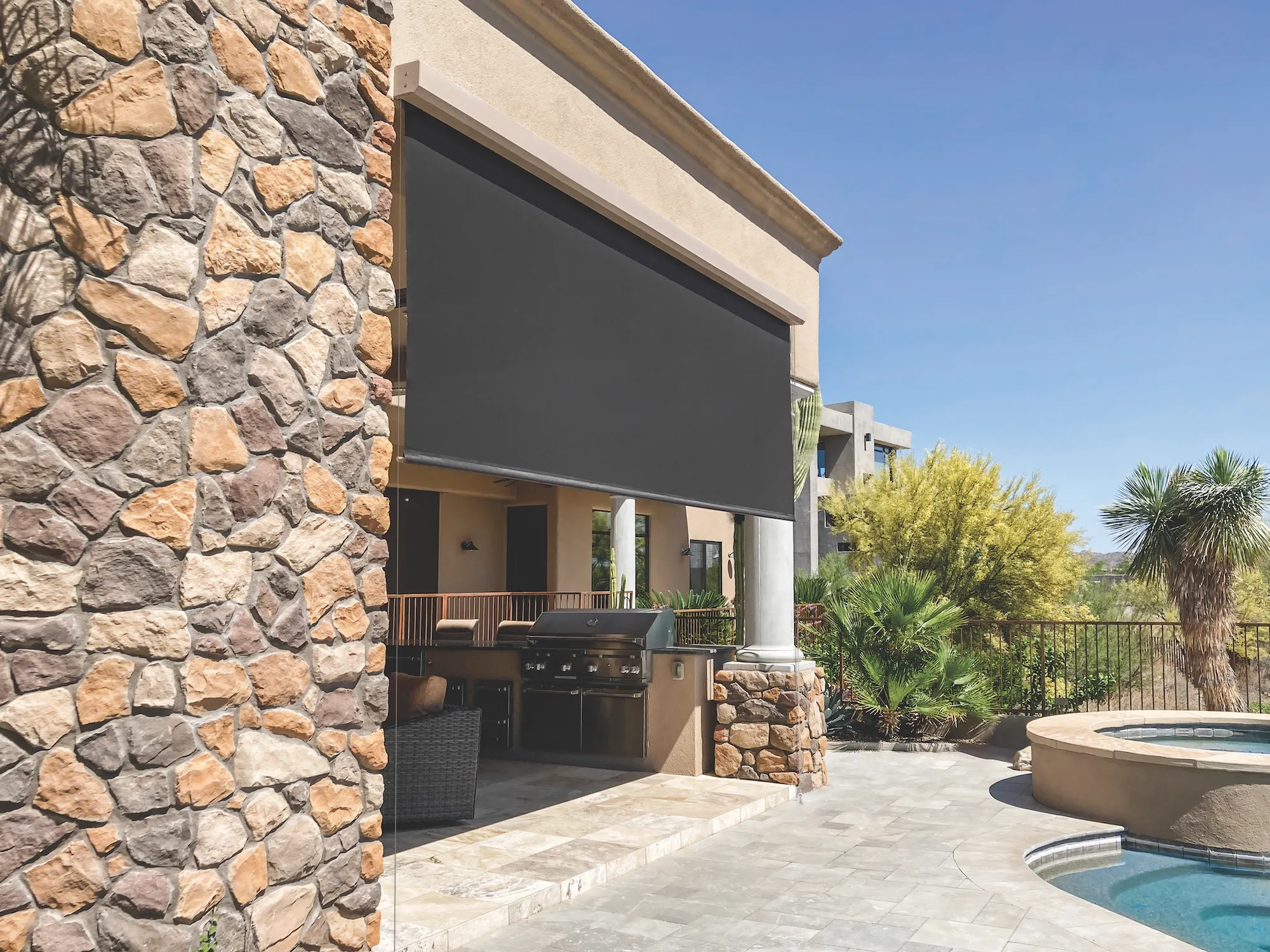
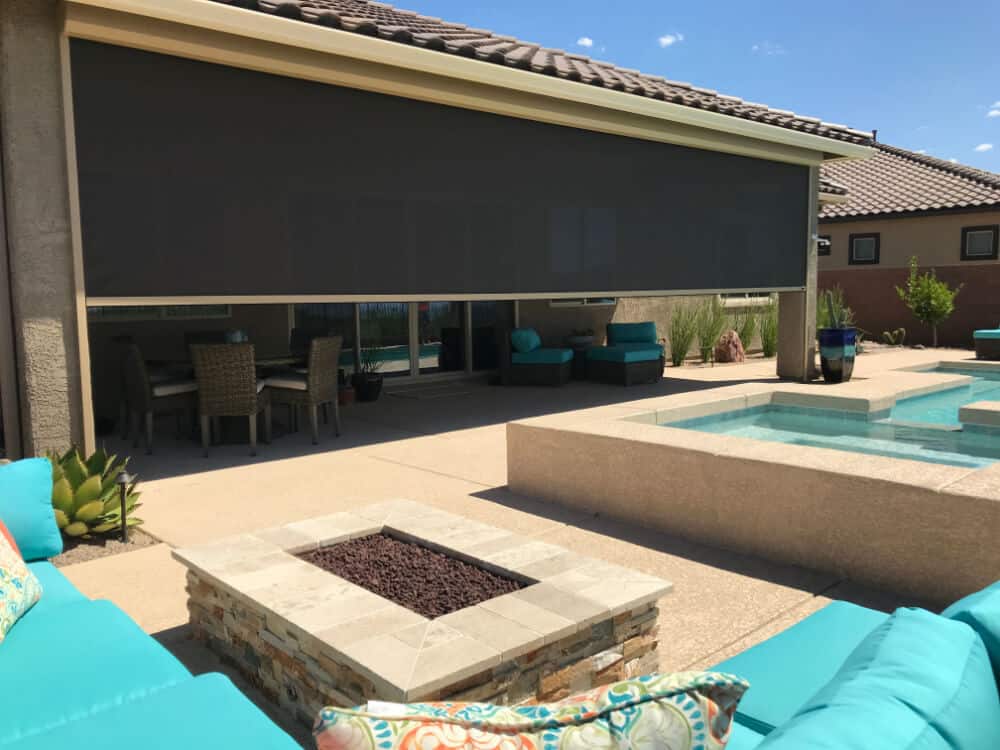
A retractable motorized screen on the north-exposed side of your patio is the most effective single upgrade for winter use. Deploy it when north winds pick up, and it turns a cold, exposed outdoor patio into a sheltered outdoor room. Solar screens used as wind barriers also help retain heat — a fire pit or propane patio heater performs noticeably better when cold air is blocked before it hits your seating area. Retract the screen on calm, sunny afternoons and let the southern sun warm the space naturally.
For fixed structures, a solid fence panel, stacked planter wall, or trellis with dense evergreen screening on the north side also works. If your patio is open on multiple sides, prioritize the north and northwest exposures first. Get that wind block in place before you move to the glare problem on the south and west — the wind is doing more damage to your comfort on chilly days than the glare is.
Motorized Retractable Screen (Desert Shade)
Quote-based; free consultation available
Blocks north winter wind when deployed, retracts fully when afternoon sun warms the space — gives you moment-to-moment control over your patio's microclimate without leaving your chair.
Install Exterior Solar Screens on South and West Sides to Manage Low-Angle Winter Glare
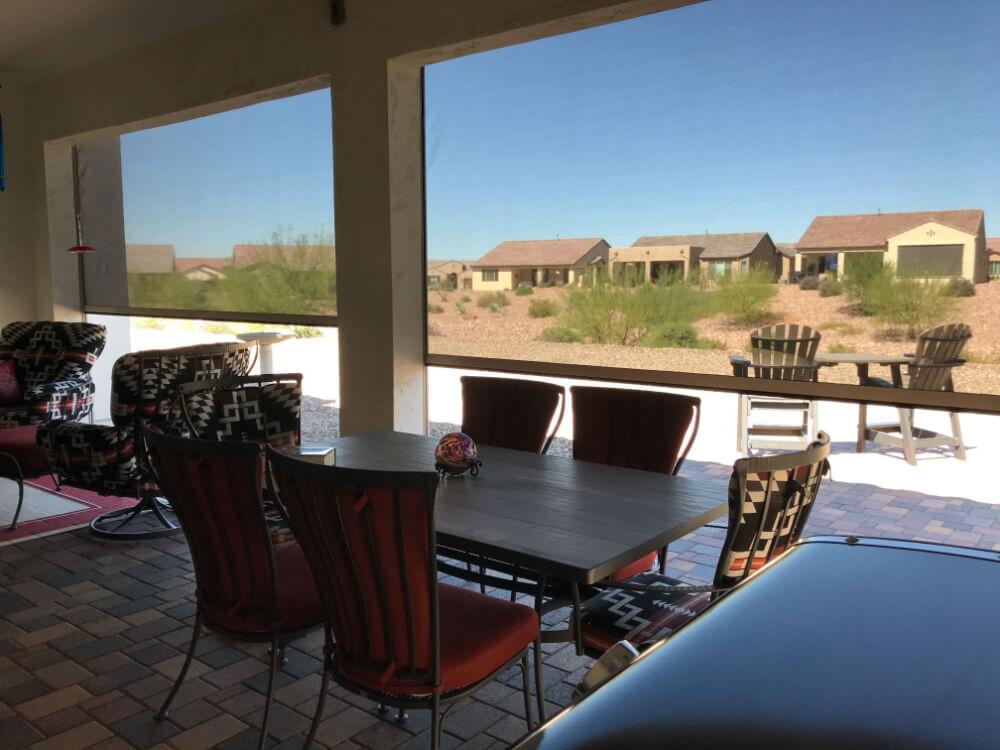
Exterior solar screens on south- and west-facing patio openings are the right solution for low-angle winter glare — and no other product category does this job. Interior blinds don't help here. By the time you close them, the heat and glare have already entered the space. Exterior solar screens filter harsh, low-angle sunlight before it hits the patio, letting soft natural light in without the discomfort. You keep the warmth of passive solar heat without squinting into horizontal rays from 10 AM to sunset.
Mermet fiberglass fabric solar screens block up to 95% of UV rays year-round. That matters even in the cooler months: winter UV still fades outdoor furniture, outdoor rugs, and patio textiles at a rate most homeowners underestimate. A quality solar screen protects your weather-resistant furniture and cushions through every season, not just summer. Desert Shade is the exclusive regional dealer for Mermet fiberglass fabric, and the 10-year no-fade guarantee means the screen itself won't degrade under desert sun.
The key advantage of motorized retractable solar screens in winter is flexibility. Las Vegas averages about 8 hours of sun per day even in December and January — over 300 days of sunlight per year total. On a calm, sunny afternoon when the south-facing sun is warming the patio space rather than blinding you, retract the screen and let passive solar heat work. Deploy it again as the sun swings west and late-afternoon glare kicks in — December sunsets around 4:27–4:30 PM mean that last hour of westerly light is the worst for glare on the outdoor patio. Motorized operation with Bond Bridge smart-home integration lets you do this without leaving your chair.
Exterior Solar Screens with Mermet Fiberglass Fabric (Desert Shade)
Quote-based; manufacturer-direct pricing, no middleman markup
Blocks up to 95% UV, filters low-angle winter glare before it enters the patio, and carries a 10-year no-fade guarantee — available with motorized operation and smart-home integration.
Bond Bridge Smart-Home Integration
Included with motorized screen setup
Controls motorized screens via Alexa, Google Home, or the Bond app — deploy or retract screens without leaving your patio chair, essential for managing the rapidly shifting Las Vegas winter sun.
Important
A patio roof or pergola cover blocks overhead sun but cannot stop low-angle winter sun entering from the sides. Vertical exterior solar screens are the only product that addresses lateral winter glare. If you already have a covered patio and you're still squinting all winter, this is exactly why — and adding more overhead coverage won't fix it.
Choose Your Heat Source: Fire Pit, Outdoor Fireplace, Patio Heaters, or Heat Lamps
Once the wind is blocked and the glare is managed, choose a supplemental heat source sized to your patio space. An outdoor fire pit works well as a social focal point and provides radiant heat for a circle of 6–8 chairs. Natural gas fire pits are the cleanest option for frequent use — no propane tank swaps, no ash cleanup. Propane fire pits are more flexible if you don't have a gas line on the patio. An outdoor fireplace serves the same warming function with a more architectural feel and works especially well on a covered patio where the chimney can vent properly. Either way, the fire pit or outdoor fireplace becomes significantly more effective once north wind is blocked — the heat stays in the patio space instead of being stripped away.
Patio heaters and heat lamps cover different use cases. A freestanding propane patio heater at 40,000–46,000 BTU heats a roughly 20-foot diameter area and suits open layouts well. Electric heat lamps mounted overhead or on a wall fit better on enclosed or semi-enclosed patios where propane ventilation is a concern — and they pair well with motorized screens that partially enclose the space. For a small patio seating 2–4 people, two well-placed heat lamps are often enough on their own. Adirondack chairs positioned near a fire pit with a heat lamp overhead for backup is a practical setup for most Las Vegas winter nights when the temperature drops into the low 40s.
A hot tub is worth naming as a heat source that doubles as entertainment. Soaking in a hot tub on a Las Vegas winter evening is genuinely comfortable when the patio is wind-blocked. If a hot tub is already in your backyard plans, a motorized screen enclosure around it adds privacy and keeps cold air off the water surface, cutting heat loss and reducing operating costs. A hot tub paired with a fire pit and good lighting creates an outdoor space that functions as a winter wonderland for family and guests without anyone retreating indoors.
Furnish for Cold Weather Comfort With Outdoor Furniture, Rugs, and Textiles
Weather-resistant furniture in powder-coated aluminum, teak, or all-weather wicker holds up through winter weather without needing waterproof covers pulled on every night. For Las Vegas, where winter rain averages under an inch per month, the bigger threat to patio furniture is UV fading — which your solar screens now largely handle. Choose outdoor furniture with UV-resistant cushions and you'll get years of use without colors washing out. Teak develops a natural gray patina outdoors and requires almost no maintenance. Aluminum frames are lighter to rearrange around the fire pit as the cold weather season changes into spring.
Outdoor rugs add warmth underfoot on cold concrete or pavers — literally. A thick, weather-resistant outdoor rug under the seating area traps some radiant heat from the patio surface and makes sitting outside in light shoes comfortable instead of cold. Polypropylene or recycled plastic weave outdoor rugs are mold-resistant and easy to hose off after Las Vegas dust storms. They come in many styles, sizes, and color palettes, so personal style doesn't have to take a back seat to practicality. Pair the rug with a stack of fleece throws on a side table or in a weatherproof basket — snuggly blankets and throw pillows in wool or fleece are the fastest way to create a cozy patio without any installation required.
Comfortable seating around the fire pit is the social engine of a winter patio. A mix of Adirondack chairs — which position guests low and close to the fire's radiant heat — plus a loveseat or small outdoor sofa with comfy furniture-grade deep cushions, and a few side tables for hot cocoa or drinks gives family and guests options. Choose pillows in outdoor-rated fabrics. Pick up a few extra throws — people will use them. The goal: a patio space where family stays outdoors through the long winter nights instead of heading indoors when the temperature drops.
Add Lighting, a Winter Garden Corner, and Final Patio Ideas for the Long Winter Evenings
Las Vegas December sunsets at 4:27–4:30 PM mean your patio transitions from daylight to dark early, and good lighting is what keeps the outdoor space usable through the long winter evenings. String lights are the most versatile option — drape them along a pergola beam, fence line, or screen frame and they warm the whole patio space visually. LED string lights are weather-resistant, draw minimal power, and run on a simple timer. Supplement with lanterns or candles on the table for ambiance closer to eye level. The combination of string lights overhead, lanterns at table height, and fire from the fire pit or outdoor fireplace creates layered light that feels genuinely inviting rather than flat and clinical.
A winter garden corner adds visual warmth and life to the patio through the colder months. Las Vegas winters are mild enough for cold-tolerant evergreens and conifers — rosemary, ornamental kale, and dwarf conifers all look good in planters from December through February. These plants bring structure and green to the patio space when most summer plantings are dormant. Add a few seasonal decorations — simple, not cluttered — and the patio reads as a finished outdoor space for winter backyard ideas rather than a summer room left out in the cold. Swap summer décor for winter tones: deep greens, warm whites, and natural textures that suit the season and reflect your personal style.
For an extra layer of winter backyard fun, consider setting up a projector screen on the north-facing screen or fence panel for outdoor movie nights. With the north wind blocked, heat sources running, and guests wrapped in fleece throws, an outdoor movie on a crisp Las Vegas winter night is a genuinely great experience — and it's an ideal spot for the fire pit to double as the centerpiece of the viewing area. Once the sun path is managed, the wind is blocked, the heat source is running, and the furniture is set, you've built a patio that works from mid-morning through the long winter nights — without squinting, shivering, or heading indoors at 4 PM.
LED Outdoor String Lights (Govee or Feit Electric)
$25–$80 per strand
Weather-resistant, timer-compatible, and warm in color temperature — essential for making the patio feel cozy rather than bright and clinical during Las Vegas's long winter evenings after the 4:30 PM sunset.
Don't Skip the Sun-Path Step
The most common winter patio mistake in Las Vegas is skipping straight to the fire pit without addressing the sun angle. At 30.4 degrees above the horizon, winter sun enters your patio from the south and west all day long. An overhead cover doesn't touch it. Interior blinds don't stop it. If you add heat sources and cozy furniture before solving the lateral glare problem, you'll end up with a patio that's warm but unusable between 10 AM and 4 PM because nobody wants to sit facing horizontal sunlight for hours. Map the sun path first. Block the north wind second. Then layer everything else on top of a patio space that actually works.
Ready to use your winter patio all season instead of abandoning it in November? Desert Shade offers motorized retractable screens and exterior solar screens designed specifically for Las Vegas sun angles and desert climate conditions. The team will help you identify the right screen placement for your patio's orientation — blocking winter wind on the north side, filtering low-angle glare on the south and west, and retracting completely when the afternoon sun is warming you pleasantly. Manufacturer-direct pricing, Mermet fiberglass fabric exclusive to this region, and a lifetime warranty on motors and electronics. Contact Desert Shade today to schedule your free consultation and get your winter patio working the way Las Vegas weather actually allows.
Frequently Asked Questions
Ready to get started? Contact Desert Shade today.