
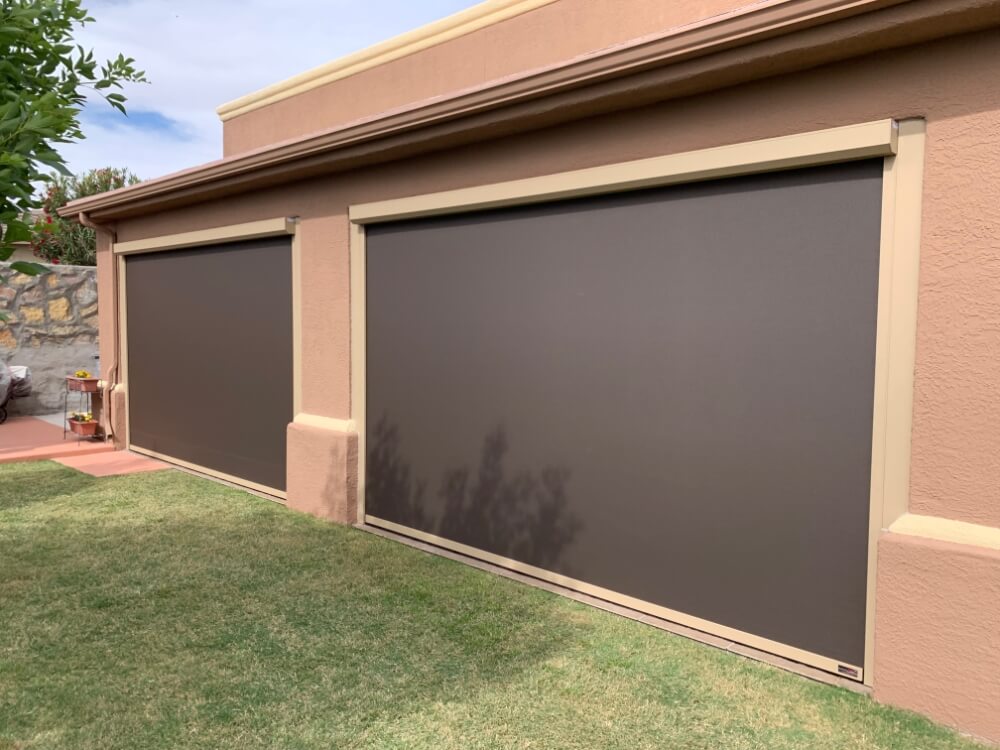
Solar screen fabric performance in Las Vegas comes down to two specs: blockage rating (80, 90, 95, 97, 99) and color. The blockage number tells you what percentage of the sun's rays the woven fabric stops. Color determines how much of that blocked energy gets reflected back outside versus absorbed by the fabric itself. According to Twitchell Technical Products' own color-comparison data, color moves the solar heat gain coefficient roughly six times more than switching from a 95 to a 99 rating. For west- and south-facing windows in desert climates, a lighter color at 90-95% blockage often outperforms a darker fabric at 99%. Exterior placement matters most of all: DOE Building America data shows exterior screens cut solar heat gain by 46-55%, while interior shades manage only 14-18%.
-
Exterior placement firstOutside screens cut heat gain 46-55%; interior shades cut only 14-18%
-
Color beats the numberColor shifts SHGC roughly 6x more than jumping from 95 to 99 rating
-
90-95% handles most windowsGoing to 99 adds marginal heat benefit; it tightens outward view more than comfort
-
KOOLBLACK resolves the trade-offDark fabric that reflects 64% NIR energy, runs up to 15 degrees F cooler
-
Match base material to applicationFiberglass for fixed frames; polyester for retractable and motorized screens
-
West and south windows need lighter colorsReflectance matters most where afternoon desert sun is direct and prolonged
Solar screen fabric quotes in Las Vegas tend to list a blockage number, a color name, and a price — and leave the homeowner to guess how those three things connect to a cooler room. They don't. The blockage rating and the color interact in ways that matter more than either spec in isolation, and choosing the wrong combination on a west-facing window can mean spending money on a screen that underperforms a cheaper, better-matched option next door. This guide walks through the specs that actually determine how well a solar screen performs in desert heat, explains the trade-offs in plain language, and gives you a practical framework for matching fabric to each window before you sign off on an order.
Before you start
- A quote or spec sheet from a solar screen installer, or a list of the windows you want to address
- Basic knowledge of which windows face west or south — a compass app on your phone is enough
- No technical background required: all fabric terms are explained in plain language in the steps below
- A clear sense of what problem you're solving: heat, glare, daytime privacy, fading, or some combination of those
Confirm Exterior Placement Before Worrying About Any Fabric Spec
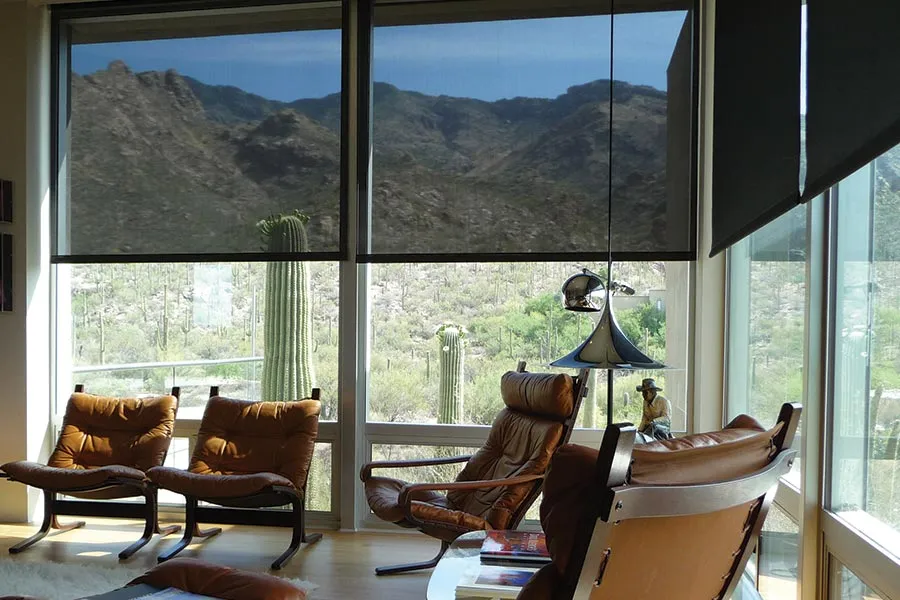
Exterior placement of a solar screen outperforms any upgrade in blockage rating on an interior product. DOE Building America research shows exterior solar screens reduce solar heat gain by approximately 46-55%, while interior roller shades cut it by only 14-18%. The reason is physics: an exterior screen intercepts the sun's rays before they reach the glass. An interior shade manages heat that has already entered the room.
In Las Vegas, where west-facing glass can push afternoon interior temperatures well past what most AC systems can keep up with, that gap matters. A homeowner who upgrades from a 90-rated interior shade to a 99-rated interior product will still see far less relief than one who installs an exterior solar screen at 90%. Get the placement right first; then the fabric spec conversation becomes productive.
This is also why exterior solar screens protect furnishings and slow fading on flooring and upholstery more effectively than interior blinds. Blocking heat and UV rays before they hit the glass removes the source of damage, not just the symptom.
Good to know
If you're comparing a quote for exterior solar screens against a quote for interior roller shades, the two products are not doing the same job. The exterior screen wins on heat control in almost every desert-climate scenario, regardless of which fabric either product uses.
Read the Blockage Number: What 80, 90, 95, 97, and 99 Actually Mean for Solar Screen Fabric
The number in a solar screen fabric name — 80, 90, 95, 97, 99 — tells you the percentage of the sun's rays the fabric blocks. A 90-rated screen blocks 90% of solar energy passing through it; a 95 blocks 95%. The relationship is straightforward: a tighter weave produces a higher blockage number, passes less light, and reduces outward visibility. Those three things move together.
Mermet's M Screen line illustrates this clearly. The 1% openness fabric achieves roughly 99% UV blockage; the 3% openness fabric hits roughly 97%; the 5% openness fabric delivers roughly 95%. All three are built on the same 36% fiberglass, 64% vinyl construction — the difference is purely how tight the woven structure is, per Mermet's published ASTM-tested spec sheet. Twitchell Technical Products' Nano line uses a similar approach with PVC-coated polyester: Nano 95, Nano 97, and Nano 99 differ only in weave density, not base material.
For most Las Vegas homes, a 90% fabric handles the majority of heat and glare problems well. Moving to 95 or 97 makes sense when a room needs stronger daytime privacy or the glare from direct sun is disrupting a TV or workspace. The heat-control gap between a 95 and a 99, though, is smaller than most homeowners expect — and Step 3 explains why color is where the bigger difference actually lives.
Mermet M Screen Spec Sheet (mermetusa.com)
Free download
ASTM-tested UV blockage, light transmittance, and SHGC figures by color at 1%, 3%, and 5% openness — the most detailed per-color data from a certified mill.
Twitchell TEXTILENE / Nano Spec Sheets (twitchellcorp.com)
Free download
Covers 80, 90, 95, 97, and 99 ratings in PVC-coated polyester; includes NFPA 701 and CA Title 19 fire certifications for each product family.
Learn Why Color Moves Heat Gain More Than the Blockage Number
Color is the most underrated spec in solar screen fabric selection. Twitchell Technical Products tested a 95-rated fabric across seven colors, and the results show the scale of the difference: in Black/Black, 7% of solar energy passes through but the fabric absorbs 90% of what it blocks. In White/White, 23% passes through but 66% of the intercepted energy is reflected back outside. Changing the color moves the solar heat gain coefficient roughly six times more than switching from a 95 to a 99 fabric. That's not a marginal difference; it's the single most important variable after placement.
The practical consequence: a homeowner who selects a 99-rated charcoal fabric assuming a higher number means less heat may actually see more solar heat gain than a neighbor who chose a 95-rated white or beige screen on the same west-facing window. Lighter colors — white, beige, sand — reflect more solar energy back outside, making them stronger raw heat blockers for south- and west-facing windows in direct afternoon sun. Darker colors — charcoal, black, bronze — absorb visible light rather than reflecting it. The dark weave reduces glare and delivers a cleaner, crisp outward view. But a dark fabric at the same openness rating runs warmer than a light one because it holds more of the energy it intercepts.
The takeaway for Las Vegas homes: if your primary goal is keeping a room cooler or reducing the load on your AC, don't default to the darkest color. Review the reflectance data in the spec sheet. Glare control and daytime privacy, on the other hand, favor darker fabrics — and Step 4 covers a technology that closes the gap between those two goals directly.
Common mistake
Picking a 99-rated charcoal screen for a hot west-facing window, assuming a higher number means more cooling. Twitchell's own color-comparison data shows color — not those extra four percentage points — is what drives the real difference in solar heat gain. Check both specs before you decide.
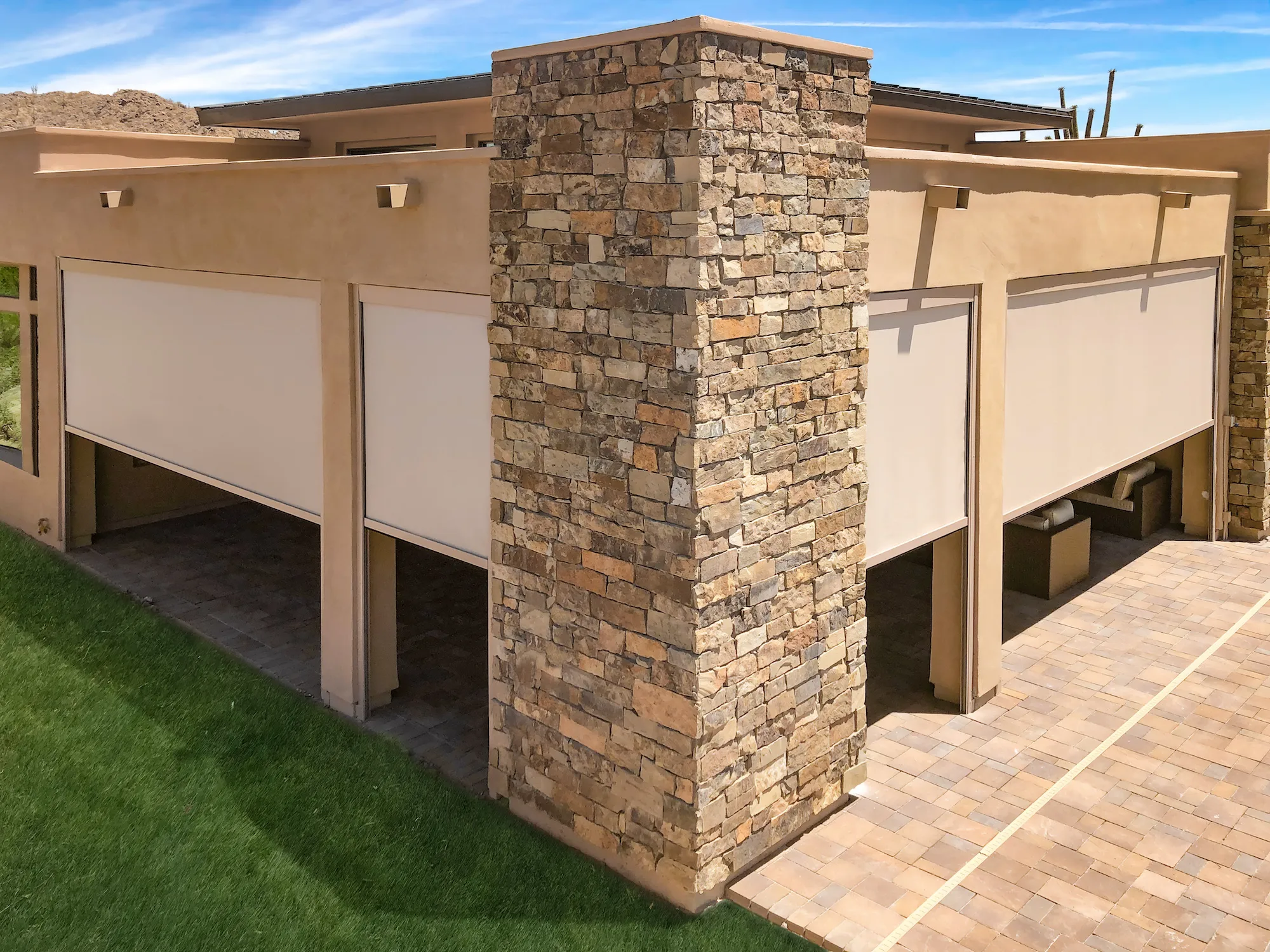
Discover How KOOLBLACK Technology Resolves the Dark-vs.-Light Trade-Off
Mermet's KOOLBLACK technology addresses the core tension between dark-fabric visibility and light-fabric heat control. Standard charcoal solar screen fabric reflects roughly 3% of near-infrared (NIR) energy — the portion of the sun's spectrum that drives heat gain without visible light. KOOLBLACK yarn incorporates patented NIR-reflective properties developed with BASF, pushing that figure to 64% NIR reflectance. The result is a dark fabric that runs up to 15 degrees F cooler than a conventional dark screen and improves SHGC by up to 23% compared to common dark fabrics, while preserving the crisp outward visibility dark screens are known for.
For a Las Vegas homeowner who wants both things — a clear view out and strong heat control — KOOLBLACK is the spec to ask about. It's available in Mermet's E Screen and T Screen families at various openness options. Desert Shade is the exclusive Mermet dealer in the Las Vegas region, so KOOLBLACK fabric is available here in a way it isn't through general home-improvement retailers.
Not every window needs it. A patio screen on a covered north-facing wall performs fine with a standard dark fabric. But for a TV room with a large west-facing window where you want daytime privacy, a clear view through the screen, and a cooler space, KOOLBLACK closes the gap that used to force a choice between color and comfort.
Choose the Right Base Material: Fiberglass vs. Polyester for Each Application
Two base materials dominate the sun control fabrics market: vinyl-coated fiberglass, used by Mermet and Phifer, and PVC-coated polyester, used by Twitchell Technical Products in their TEXTILENE and Nano lines. Fiberglass is dimensionally stable — it resists stretching and sagging on wide spans — and maintains very consistent weave density over long years of use. It's the stronger choice for fixed-frame exterior solar screens on large windows. Phifer's Super Solar Screening+ is built on a 36% fiberglass, 64% vinyl construction and absorbs and dissipates up to 90% of UV rays per the company's published specs, with a Class A NFPA 101 fire rating and GREENGUARD Gold certification.
PVC-coated polyester is tougher under repeated bending and more tear-resistant, which makes it the right material for retractable and motorized screen applications where the fabric rolls and unrolls daily. Twitchell's TEXTILENE fabric carries a 15-year limited warranty, meets NFPA 701 and CA Title 19 fire certifications, and is proudly made in the USA. Pet-resistant options also typically use polyester-based mesh because it handles puncture stress better than fiberglass, which can crack at the point of impact and is difficult to repair. If insects are a concern on a patio, solar screen mesh filters insects as well as sunlight — though it's designed as a sun-control product first, not a traditional insect screen.
For most fixed exterior solar screens on Las Vegas windows, fiberglass-based fabric — Mermet M Screen, Phifer Super Solar Screening+ — is the standard-bearer: stable, spec-verified per color, and backed by mill-level ASTM testing. For motorized retractable screens on a patio or garage opening where the fabric flexes every day, a quality polyester-based option will withstand years of mechanical cycling better than fiberglass.
Phifer Super Solar Screening+ (phifer.com)
Free spec sheet
36% fiberglass / 64% vinyl; 90% UV blockage; GREENGUARD Gold and Class A NFPA 101 certified — useful comparison point for fiberglass-based fabric performance.
Twitchell TEXTILENE 80/90 and Nano 95/97/99
Installer-direct pricing
PVC-coated polyester; 15-year warranty; ideal for retractable and motorized applications where daily flexing would fatigue fiberglass over time.
Pro tip
Ask any installer whether the fabric spec sheet lists ASTM-tested UV blockage by color, not just a single headline number. Certified mills like Mermet and Phifer publish per-color data. Generic, no-name fabric often lists one number for the whole line — and real-world installers have measured unbranded 3% fabric that behaved like 5%, with no spec sheet to verify the difference and no recourse after purchase.
Match Solar Screen Fabric Spec to Window Orientation: A Practical Decision Framework
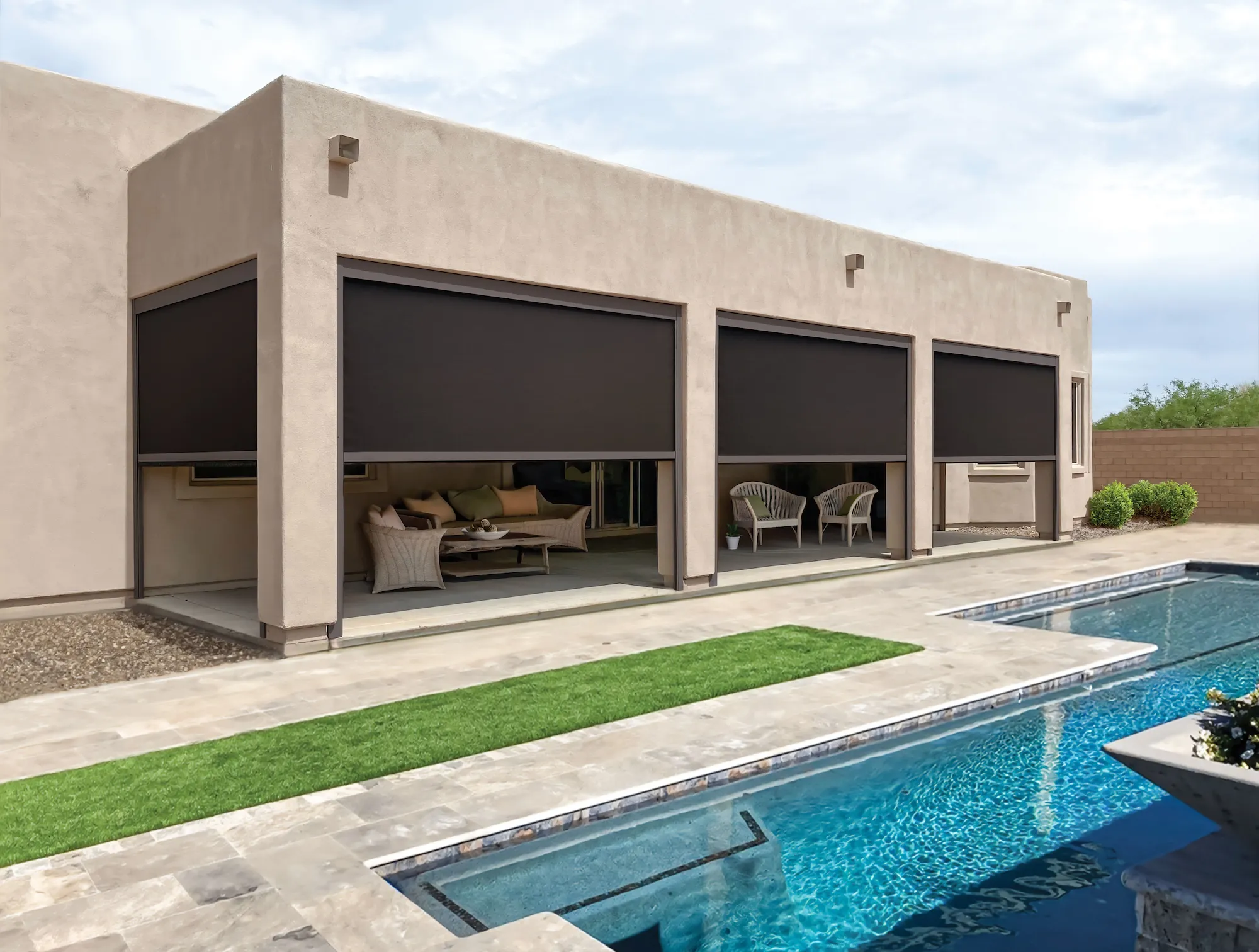
Window orientation is the single most useful input when choosing a solar screen fabric for a Las Vegas home. West- and south-facing windows take direct afternoon sun — the longest, most intense heat load of the day. Those windows benefit most from lighter-colored fabrics (white, beige, sand) or KOOLBLACK dark fabrics, because both approaches prioritize reflectance or NIR management over absorption. A 90-95 rating is usually sufficient; going to 99 on a west window in a light color adds marginal benefit beyond what a 95 already delivers, and it sacrifices a bit of outward view in exchange.
East-facing windows get morning sun, which is lower-angle and less intense. North-facing windows rarely see direct sunlight at all in Las Vegas. For those orientations, a standard dark charcoal at 90% is often the ideal choice: it gives excellent daytime privacy, reduces glare for morning screen and computer use, and keeps views clear. The heat load on those windows doesn't warrant sacrificing visibility for maximum reflectance.
Patio screens add one more variable: how much of the outdoor space you want to see through versus how much privacy you need from neighbors. A pool area with afternoon western exposure benefits from a lighter fabric to keep the space cooler. A covered patio used for evening entertaining — where the sun is not the issue but privacy is — works well with a dark fabric at 90%. The free consultation Desert Shade offers is the right place to confirm these choices against your home's actual orientation, overhang depth, and the specific windows in question. Bring your quote sheet; the review takes about 30 minutes and answers the direction questions a spec sheet alone can't.
Don't Buy on the Blockage Number Alone
The most common mistake when purchasing solar screen fabric is choosing the highest blockage number available and assuming the job is done. As Twitchell's own color-comparison data shows, color moves your solar heat gain coefficient roughly six times more than bumping from a 95 to a 99 rating. A well-chosen 90-rated fabric in the right color will outperform a poorly matched 99-rated fabric on the same window. Always review the per-color spec sheet from a certified mill — not a generic product page — and confirm your fabric choice against your window's orientation before you add anything to your order.
When you get the specs right — exterior placement, the correct blockage rating, the right color for your window's orientation, and a base material matched to how the screen will move or sit — a solar screen does its job quietly and for a long time. You stop adjusting the thermostat every afternoon and start using the rooms you've been avoiding. Desert Shade serves Las Vegas, Henderson, and Summerlin with ASTM-tested Mermet and Phifer fabrics, manufacturer-direct pricing, and a free consultation that matches spec to window before anything is ordered. Contact Desert Shade to schedule your consultation and get answers specific to your home, not a number from a generic spec chart.
Frequently Asked Questions
Ready to get started? Contact Desert Shade today.