
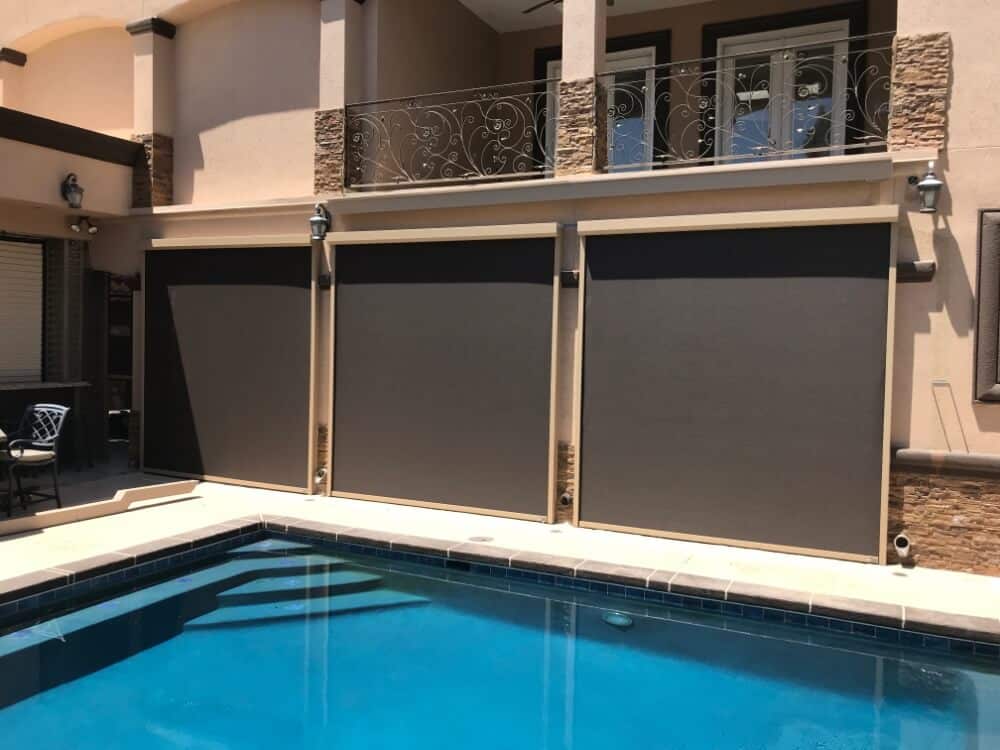
Exterior solar screens block 80–90% of the sun's heat and glare before it reaches the window glass — a structural advantage interior blinds and curtains can never match, because those products only act after heat is already inside. DOE Building America research (Rempel et al. 2022) found exterior shades cut dangerous heat hours by roughly 55%, compared to 18% for interior roller shades. For Las Vegas west- and south-facing windows, the right choice is a quality mesh (Phifer SunTex or Mermet fiberglass) at a 3–10% openness factor, in a dark color, professionally measured and installed to eliminate edge gaps where heat can bypass the screen entirely.
-
Exterior placement is everythingScreens outside the glass stop heat at the source; interior blinds fight heat that already entered
-
80–90% heat blockageWhat quality mesh (Phifer SunTex, Mermet) blocks before it touches the glass
-
Openness factor is the core spec3–10% openness gives the right heat-and-view balance for west- and south-facing windows
-
Dark mesh, clearest viewCharcoal and black absorb rather than reflect — better glare control and outward visibility
-
Edge gaps kill performanceA perfect perimeter seal is what makes the mesh rating real; custom fit is non-negotiable
-
Only an occasional cleaning neededMild soap and water; fabric failure from cheap mesh is the real long-term risk
Exterior solar screens block heat before it reaches your glass — that single fact explains why they outperform every interior option on the market. For Las Vegas homeowners dealing with west- and south-facing rooms that bake from April through October, understanding how these screens work, what specs actually matter, and what a proper installation looks like is the difference between a product that delivers on its numbers and one that just looks like it should. This guide walks you through the mechanism, the two key decisions (openness factor and mesh color), the installation details that make or break performance, and how to maintain custom solar screens so they last. Reading and deciding on next steps takes about 15–20 minutes; a professional installation typically follows within one to three days of a free consultation.
Before you start
- Know which windows cause the most heat gain — typically west- and south-facing rooms that bake in the afternoon sun.
- Understand that solar screens are an exterior shading product: placement outside the glass is what makes them effective, not the mesh material alone.
- Have a rough count of the windows or openings you want to cover so a free consultation estimate is as useful as possible.
- Be ready to compare openness factor percentages (1%–10%) and mesh colors — these are the two main specs that determine the heat-versus-view tradeoff.
- Know your priority going in: maximum heat blockage, maximum daytime privacy, clearest outward view, or a balance of all three.
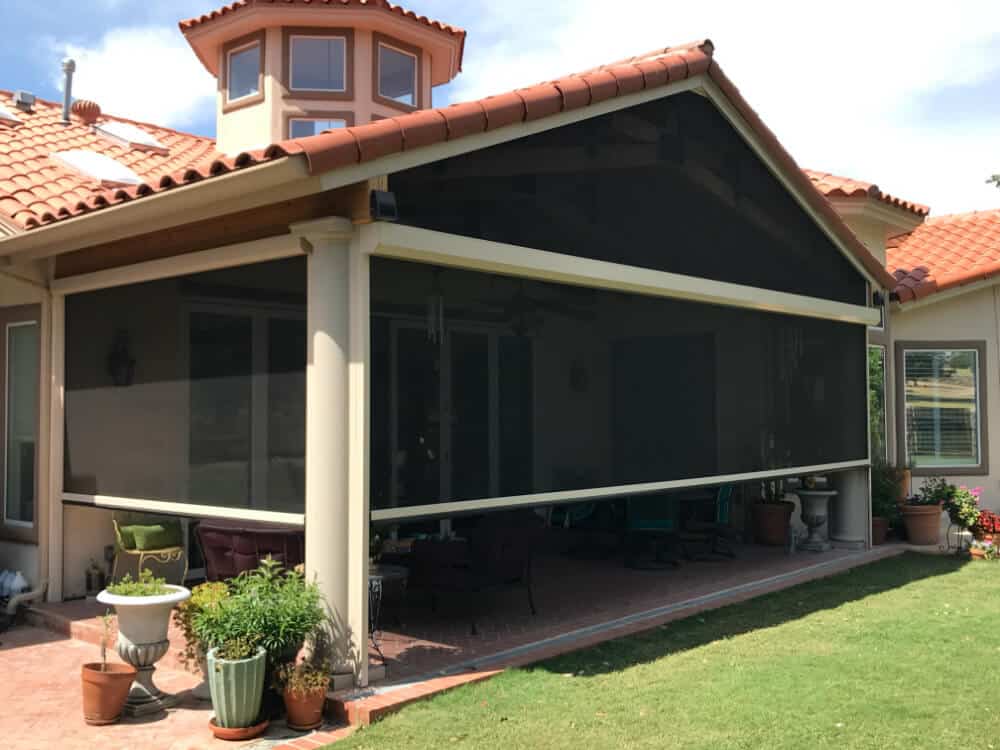
Understand Why Exterior Solar Screens Block Heat So Much Better Than Interior Blinds
Exterior solar screens stop solar heat before it ever reaches the glass — that's the structural advantage interior blinds and curtains can never match. When sunlight passes through a window and strikes an interior blind, the heat is already inside the room, trapped and radiating off the glass and blind surface. An exterior screen intercepts that solar heat gain on the outside, so the glass never heats up in the first place.
DOE Building America research (Rempel et al. 2022) put real numbers on this gap: exterior shades cut dangerous heat hours in a non-air-conditioned home by about 55%, while interior roller shades managed only about 18% and insulating interior shades reached about 23%. That's roughly a 3x performance difference from placement alone, before fabric quality even enters the equation. A separate peer-reviewed study (Brunger et al. 1999, cited by DOE) measured that even plain exterior insect screens — not purpose-built solar screen mesh — reduced solar heat gain by 46%, versus 14% for interior screens. Those screens also provided basic insect protection as a secondary benefit, which shows how much work exterior placement does on its own.
For Las Vegas homeowners running cooling systems from April through October, that gap isn't academic. DOE whole-home field studies (Cort et al. 2018, Hunt and Cort 2020) show 15%–25% summertime cooling energy savings from optimized high-efficiency exterior shades. Interior blinds and curtains, no matter how thick or expensive, can't stop heat that's already inside the glass — and they can't cut heating costs the way a well-sealed exterior screen does during shoulder-season temperature swings.
Key Mechanism
Solar heat gain is the process by which sunlight passing through glass converts to indoor heat. Exterior shading intercepts solar radiation before it crosses the glass, stopping heat at the source. Interior treatments only reduce what happens after heat is already inside — which is why the DOE data shows such a wide performance gap between exterior and interior solar screens.
Learn How Much Heat Solar Screens for Windows Actually Block
Quality exterior solar screens block 80%–90% of the sun's heat and glare before it reaches the window glass, with some tighter-weave products reaching up to 95%. Phifer SunTex — one of the industry benchmarks for solar screen mesh — is rated at 80% and 90% blockage across its two main densities. Across the full range of solar window screens, blockage runs from about 65% on lighter-weave mesh up to 90-plus percent on dense, purpose-built fabric.
These numbers reflect heat and glare stopped outside the glass, not just UV filtration. Harmful UV rays are a related but separate concern: at 90% mesh density, UV blockage also reaches approximately 90%, which is what protects interior flooring, furniture, and artwork from sun damage over time. The heat blockage number and the UV blockage number tend to track closely in high-quality mesh — both are functions of how tight and consistent the unique woven mesh construction is.
What matters most for Las Vegas west- and south-facing rooms is the heat reduction during peak afternoon hours, when the summer sun hits hardest. At 80%–90% blockage, a properly installed exterior solar screen cuts solar heat gain dramatically enough to keep rooms comfortable without the AC running at full capacity — which is what actually drives down energy costs across the long summer months. Sun shades at this performance level aren't a marginal upgrade; they change how often the thermostat kicks on.
Phifer SunTex 80/90
Varies by installer; manufacturer-direct pricing through certified dealers
Industry-standard solar screen mesh with documented 80%–90% heat and glare blockage; strong vinyl-coated polyester construction built for desert sun exposure and long-term durability
Mermet Fiberglass Fabric
Available through Desert Shade (exclusive dealer in the Las Vegas region)
High-performance fiberglass mesh with comparable fade resistance and heat blockage to SunTex; built to handle years of desert sun without sagging or color shift
Choose Your Openness Factor: How Screen Mesh Weave Controls Heat, Glare, and View
The openness factor is the single most important spec on any heat blocking window screen. It describes what percentage of the mesh weave is open space rather than fabric material. A lower openness factor means a tighter weave — more material, less gap — which blocks more heat, more glare, and offers the most daytime privacy. A higher openness factor means a looser weave that lets in more natural light and preserves a clearer outdoor view, but blocks less heat.
In practical terms: a 1%–3% openness screen delivers the highest heat and glare control with strong privacy during daylight hours — you can see out, but neighbors looking in see the mesh surface, not through it. A 5%–10% openness screen suits rooms where natural light is a priority and the window doesn't face the afternoon sun directly. For west- and south-facing Las Vegas windows where afternoon solar heat gain is severe, the standard professional recommendation is a 90% shade factor screen — which corresponds to roughly a 10% openness factor or tighter. These shade screens are built to intercept the sun before the heat coming through the glass ever enters the room.
Don't confuse openness factor with shade factor: they move in opposite directions. A 10% openness factor equals a 90% shade factor (meaning 90% of incoming light and heat is blocked). A 3% openness factor equals a 97% shade factor. Most product labels list one or the other — make sure you're comparing the same metric when evaluating solar screens for windows across different brands or suppliers.
Quick Reference
Openness factor and shade factor are inverses: 10% openness equals a 90% shade factor. The lower the openness number, the more heat and glare the screen blocks — and the more daytime privacy it provides. For Las Vegas west- and south-facing windows, 3%–10% openness (90%–97% shade factor) is the typical professional recommendation.
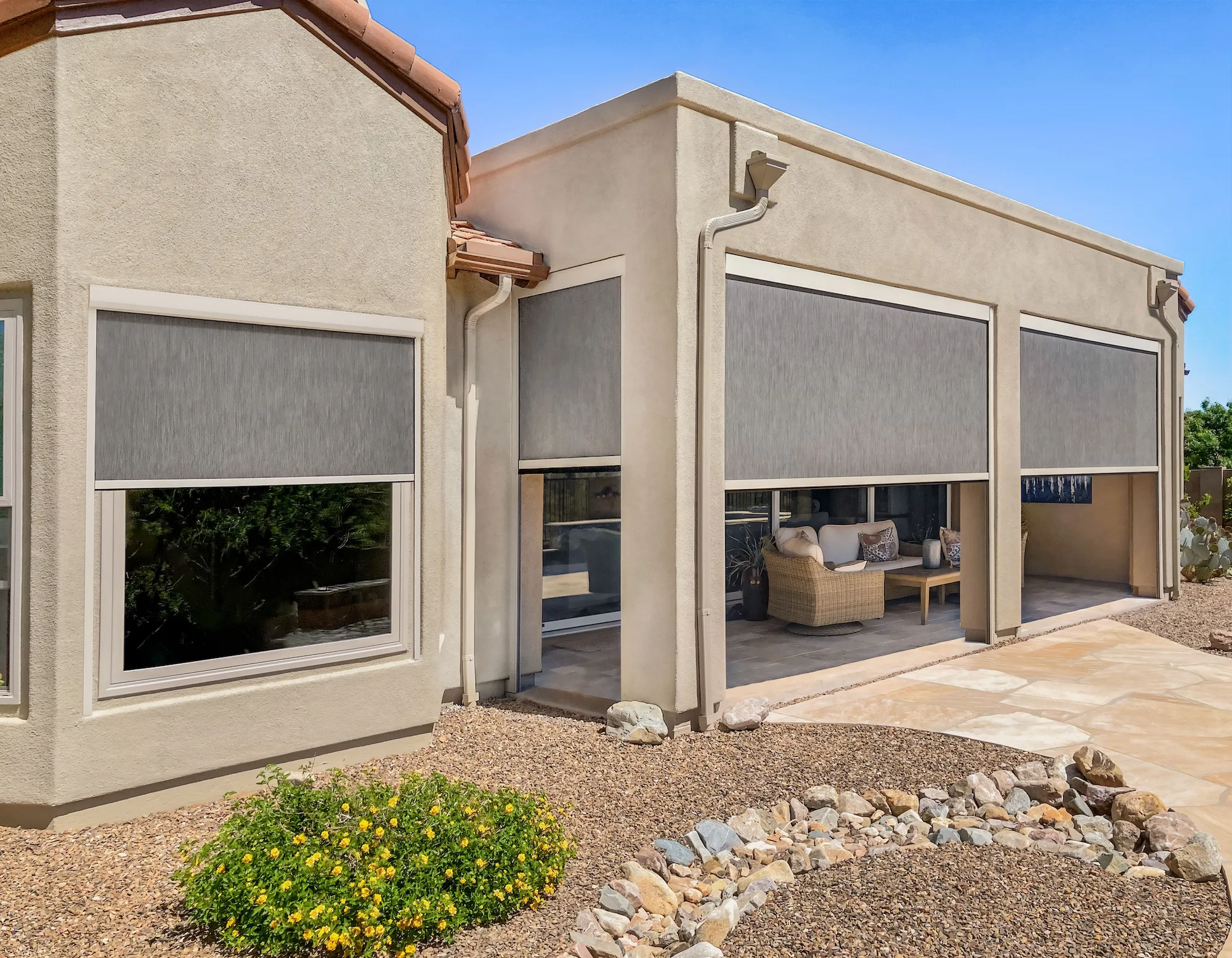
Pick the Right Mesh Color: How Darker Colors Improve View and Glare Control
Mesh color does not change how much total heat a solar screen blocks — a charcoal 90% screen and a beige 90% screen block approximately the same amount of heat and harmful UV rays. What color controls is how the blocked light behaves, which affects outward visibility and glare control in different ways. This is a nuance that matters more than most homeowners expect when they're actually sitting in the room.
Darker meshes — charcoal, black, bronze — absorb incoming light rather than reflecting it. That absorption is what gives darker screens their superior outward visibility: your eyes look through a dark surface toward a bright exterior, which produces good outward visibility and the best glare control inside the room. Lighter meshes reflect more incoming light back outside, which can appear slightly different in terms of interior glare, but the lighter color also creates a hazy, washed-out appearance when you look through the screen from inside — the view through a tan or white mesh often feels dimmer and less defined, even at the same shade factor.
For Las Vegas homes with west- and south-facing windows, darker mesh at 90% shade factor is the standard professional recommendation — it handles extreme afternoon glare while preserving a reasonable outward view. Lighter colors like tan or beige are sometimes chosen for appearance on the home's exterior or to match trim, and that's a legitimate tradeoff. But if glare control inside the room is the priority, darker colors consistently perform better. Desert Shade's team can walk you through available finish options, including how each color reads from inside the room versus from the street, before you finalize your order.
Install Solar Screens with a Perfect Fit to Eliminate Edge Gaps
A screen that doesn't seal tightly against the window frame loses a significant portion of its heat-blocking performance at the edges. This is one of the most common failure modes with cheaper or off-the-shelf solar screens: the mesh itself may be rated at 80% blockage, but if gaps exist around the frame perimeter, solar heat bleeds around the screen and into the glass and room. The mesh rating becomes misleading if the installation doesn't achieve a true perimeter seal — and standard off-the-shelf sizes rarely match residential window frames precisely enough to eliminate this problem.
Professional measurement and installation eliminate this gap entirely. A properly fitted exterior solar screen sits flush against the window frame, with the aluminum frame holding the mesh under consistent tension across the full surface. This is also why fabric durability matters: Mermet fiberglass fabric and Phifer SunTex's strong vinyl-coated polyester (also described as PVC coated polyester) hold their shape through the expansion and contraction that desert heat cycles cause. Cheap imported screen mesh tends to sag and lose tension within a few years, which creates the same edge-gap problem over time even if the original installation was tight. The hardware connecting frame sections should also be robust — flimsy hardware is a durability risk that shows up after the first couple of summers.
Custom solar screens, measured and built to your specific window dimensions, are fully assembled to those dimensions before installation — which is the only way to ensure the heat blockage the mesh rating promises. Desert Shade measures, cuts, and installs each screen to the exact window frame size, then checks that the frame sits flush with no light gap at the perimeter. That process is what separates a screen that blocks 90% from one that blocks 90% in the center and far less at the edges.
Professional window measurement (Desert Shade)
Included with free consultation
Exact window frame dimensions are required for a custom solar screen that eliminates edge gaps — the most common performance failure in off-the-shelf and loose DIY installations
Common Failure Mode
A solar screen rated at 80% or 90% only delivers that performance if the frame achieves a tight perimeter seal against the window frame. Edge gaps — common with off-the-shelf sizes and loose frames — let solar heat bypass the mesh entirely. Professional measurement and custom fabrication are the fix.
Maintain Custom Solar Screens to Protect Long-Term Performance
Exterior solar screens made from quality mesh need only an occasional cleaning to stay effective. Phifer SunTex requires mild soap and water — no special chemicals, no pressure washing. Mermet fiberglass fabric has the same simple care requirements. Dust and debris that accumulate on the screen surface can slightly reduce ventilation and visibility, but they don't meaningfully change the screen's heat or UV blockage until buildup is significant. The low maintenance demand is one of the practical advantages solar window screens have over motorized exterior shades with more complex moving parts.
What actually degrades performance over time is fabric failure — fading, sagging, or weave distortion from low-grade mesh that can't handle sustained desert sun exposure. This is the core durability argument for choosing quality mesh over cheap imported alternatives. Desert Shade's solar screens carry a 10-year no-fade fabric guarantee, and the motors and electronics on motorized versions come with a lifetime warranty (some limitations apply). That warranty backing is only possible because the underlying materials are built to handle the desert climate long-term — cheap mesh from a hardware shop won't hold up the same way, and the company selling it won't back it the same way either.
Check the frame and spline condition once a year, especially after summer. The aluminum frame should sit flush, the spline holding the mesh in the channel should be tight, and the mesh itself should show no sag or distortion. Any of those signs point to a screen that needs re-tensioning or replacement — catching it early preserves the heat blockage performance the screen was installed to deliver, and protects the furniture, flooring, and artwork inside from sun damage.
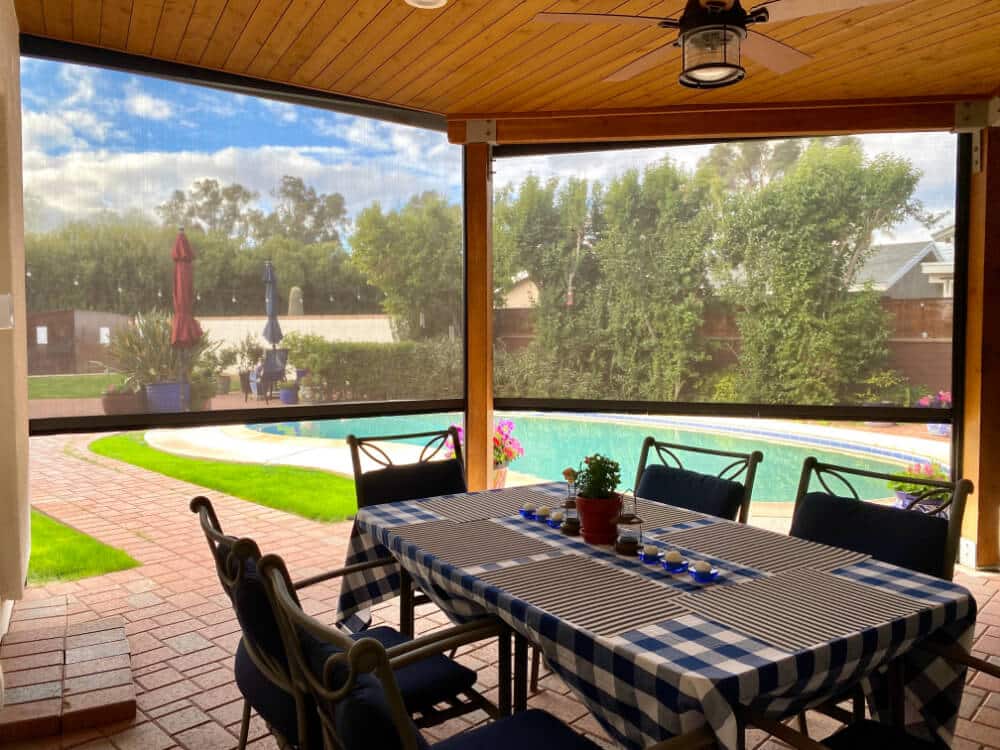
Don't Let a Cheap Screen Waste the Performance You Paid For
Solar screen mesh ratings — 80%, 90%, 95% — only hold if three things are true: the fabric is high-grade (Mermet fiberglass or Phifer SunTex strong vinyl-coated polyester, not cheap imported mesh), the frame achieves a true perimeter seal against the window frame with no edge gaps, and the screen is installed under consistent tension so the mesh doesn't sag. Skip any one of those and you're paying for a performance spec the screen can't deliver. Desert Shade builds and installs custom solar screens to window-specific dimensions using manufacturer-direct materials — which is why the results match what the numbers say they should. Homeowners on a porch or in a commercial building with high-traffic glazing face the same edge-gap risk; the fix is the same regardless of the application.
When a properly specified, correctly installed exterior solar screen is on a west-facing Las Vegas window, the room on the other side feels like a different house by mid-afternoon. The mesh is doing its job outside the glass — intercepting solar heat before it enters, cutting glare without darkening the room, protecting interior surfaces from sun damage, and reducing the load on your cooling system across a six-month summer. Desert Shade offers custom solar screens for windows designed specifically for Las Vegas's extreme desert sun and long cooling season. Contact Desert Shade today to schedule your free consultation — bring your window count, your orientation, and your priority (heat, privacy, or view), and the team will help you choose the right openness factor, mesh color, and frame configuration for each opening.
Frequently Asked Questions
Ready to get started? Contact Desert Shade today.